
Before Explanation Settles
On teaching, translation, and the moment when difficulty is gently made to disappear

I had a dream I cannot quite place.
There is a stage, improvised, almost collapsing into itself. I am on it, inadequately clad, moving through something that feels like a poorly rehearsed dance.
The audience is small. Young. Their faces slack, unfocused.
One of them stands before I finish. As he moves toward the exit, his foot comes down on something I had not noticed before: a caterpillar, large, luminous, almost translucent.
It does not flatten under the pressure. It splits, severed cleanly in two.
I leave the stage. Or perhaps I was never fully on it.
I try to gather what remains, moving the halves behind a disassembled cardboard box, as if that could still count as shelter.
𓆨
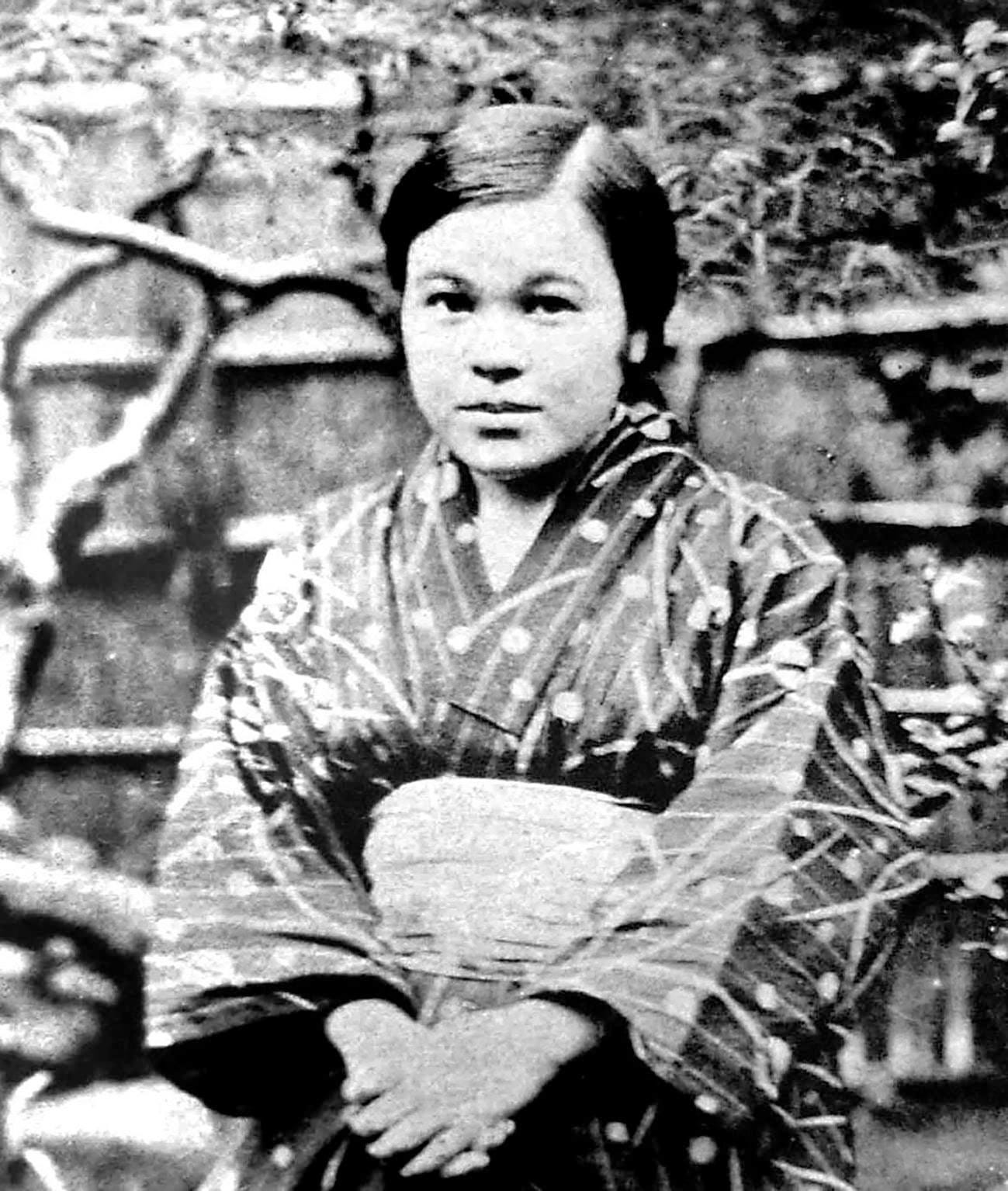
I am preparing to teach Chiri Yukie for the first time.
Like the stage, the sentence does not quite hold.
By the time I turn toward her work — toward the fragments of kamui yukar she transcribed, toward the figure she has become in literary, anthropological, and historical accounts — I am already arriving through layers that have made her accessible to me.
Translation precedes me.
Interpretation precedes me.
Careful labours have already stabilized what might otherwise resist my understanding.
I do not encounter Yukie.
I encounter what has been made of her.
For readers unfamiliar with Chiri Yukie, she is often introduced in steady terms. An Ainu woman from Hokkaido, born in 1903, who transcribed and translated The Ainu Shin’yōshū — a selection of Indigenous oral narratives told from the perspectives of various spiritual beings (kamui) — before her death at nineteen.
This is not incorrect. It just gathers too much, too quickly.
It arranges her within coordinates that are readily legible: author, translator, individual subject, located within a defined geography (Hokkaido, the northernmost of Japan’s four main islands). It suggests a trajectory that can be followed, contained.
Something is stabilized in that movement, while something else recedes.
I offer this context because it is difficult to proceed without it.
I also want to hold, in the same gesture, that this is already a reduction.
The dream returns, though not as explanation.
It returns as pressure.
A stage that does not hold.
An audience that does not fully attend.
A small, vivid life made visible only at the moment it is damaged.
And the reflex that follows: to gather, to shelter, to do something, however insufficient.
As I prepare to bring Ainu relational ontology into a classroom, I find myself returning not only to the texts I will teach, but to the habits I bring with me.
What does it mean to teach what has already been translated into forms I can recognize?
What does it mean to question those forms while relying on them?
And more uncomfortably still:
What does it mean to do so from within an institution that depends on the circulation of such knowledge?
On its clarity and fluency.
On its ability to be carried, learned, repeated.
These questions do not arrive abstractly.
They move through small gestures: a passage selected, a slide prepared, a sentence that anticipates confusion and moves to meet it.
Each decision carries an assumption about what should be made understandable.
And how.
I notice the pull to prepare my students, to equip them — to soften the encounter in advance.
This impulse feels like care. It may also be where the movement begins.
To prepare is to anticipate difficulty.
To anticipate...
To manage is to reduce...
And yet, what if the difficulty is not an obstacle? What if it is a condition that should not be resolved too quickly?
I do not know how to hold that.
This essay emerges from that not-knowing.
𓆨
Before I enter the classroom, I am not alone.
Other voices have already taken up residence. They do not arrive as intrusions. Instead, they feel like guidance, offering gentle reassurance that I will know how to proceed.
I recognize the first orientation: the impulse to contextualize. To surround the text with enough clarity that it becomes approachable. To begin with explanation and move steadily toward understanding.
I know this movement well. I have learned to value it.
And I have learned how easily it becomes something else: a way of ensuring that nothing remains beyond reach.
Another orientation follows. The insistence that Ainu lives must be recognized as contemporary, agentive, fully present within modernity.
There is a shift from something lost to something creatively negotiated and performed.
This has its own urgency. It resists erasure.
And yet it directs attention toward what can be recognized within familiar terms: identity, voice, self-determination.
I begin to wonder what falls away when these become the primary lenses.
Then a third orientation, quieter but also wider in scope. The pull toward patterns that stretch across time: trade, disease, ecological transformation, incorporation into expanding states.
Here, individual voices recede, processes take shape, events settle into trajectories.
Clarity arrives again, though of a different kind.
And again, something shifts.
What was rupture becomes process; what was loss becomes transformation.
𓆨
Three ways of seeing that I carry with me.
I move between them easily. All too easily.
Each feels necessary.
And yet, I do not know how to proceed without reproducing what they make possible.
𓆨
The stage returns.
This time as structure, not as image. A surface that holds just enough for something to appear.
I begin to recognize the reflex: to gather these frameworks, to arrange them, to make them cohere.
But what if they do not hold?
What if the task is not to synthesize them, but to remain with their tension?
To notice where they pull apart, to resist the urge to make them resolve.
While I cannot step outside them, perhaps I can begin to see how they move.
Where they clarify.
Where they stabilize.
Where they obscure.
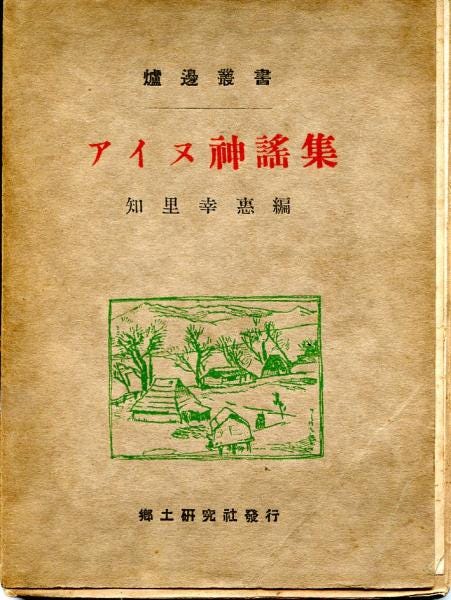
I return, cautiously, to the Ainu Shin’yōshū.
The chants are there, in print, arranged, translated, annotated.
They can be read in sequence, taught, cited, entered.
This is precisely what unsettles me. Before I encounter the voice of a kamui, I am already oriented.
I am taught how to read.
What to notice.
How to interpret what might otherwise resist coherence.
The difficulty has been anticipated.
The unfamiliar made manageable.
I can enter.
And yet something in this entry feels… too complete.
As if the work of encounter has already been done.
𓆨
One chant in the Ainu Shin’yōshū lingers.
It is narrated by a freshwater mussel.
This is not unusual within the genre. Animals speak; they tell their stories.
And yet the voice does not settle.
At times, it is singular: “I.” At others, it becomes collective: “we.”
The distinction does not hold.
In English, it must: “I” or “we.” The instability is tracked, explained, named. It becomes a structure — something is clarified; something else slips.
It is not that the voice shifts between one and many. It is that it may not fully be either.
This is harder to keep.
Because it cannot be easily held in the forms we expect.
Translation makes decisions.
Annotation gathers.
Meaning settles.
The chant becomes teachable.
I am about to teach it.
𓆨
The classroom has not yet begun.
No students, no voices.
And yet a stage is already forming.
I find myself rehearsing.
Not in loud, dramatic gestures. In small anticipatory ones:
how I will begin,
when I will speak,
how I will guide.
I imagine starting with a fragment — or silence. Allowing something to arrive before explanation.
This feels important. It also feels staged.
At some point, I will speak. I will begin to explain.
This is the movement I return to.
The shift from not-knowing to guided understanding.
The moment I step in.
𓆨
The classroom will begin.
Students will read.
I will speak.
Something will be explained.
I do not know how else it could unfold.
What I can begin to notice is the movement itself.
How quickly difficulty becomes something to be managed.
How readily instability gathers into forms that can be shared.
How teaching participates in this.
This does not mean that nothing should be explained, or that opacity should be preserved at all costs.
I am not outside this — I rely on it.
But I find myself wanting to hesitate, even briefly. To notice the moment when something unsettled begins to settle.
To ask:
What is being secured?
What is being left behind?
𓆨
“I.”
“We.”
The voice continues.
Not fully one.
Not fully many.
Not resolving.
I do not know how to hold that in a classroom. I do not know how long it can remain before it is drawn back into explanation.
The question is no longer how to preserve it.
It is whether it can register, even briefly —
before it is made to hold.
𓆨
The dream returns.
The stage that does not quite support what it carries.
The movement that does not fully cohere.
The small, vivid life made visible too late.
I am still there.
Not gathering.
Not yet.
I will return to this text, like a curiosity balm. I find myself wanting to linger and explore the place of "before it is made to hold", and maybe rest there. Thanks also for the intro to Ainu Shin’yōshū.